

AI is sliding into your browser, quietly changing the way you interact with the internet. And you might not even realise it yet.
The browser is back. Smarter. Friendlier. Way more useful.
When was the last time you thought about your web browser?
Not the tabs. Not the pop-ups. The browser itself.
For most of us, it’s that one icon we click without thinking. Chrome. Safari. Maybe Firefox if we’re feeling rebellious. It loads our emails, our Slack threads, our endless Google Docs. It does the job. We don’t question it.
But something’s shifting.
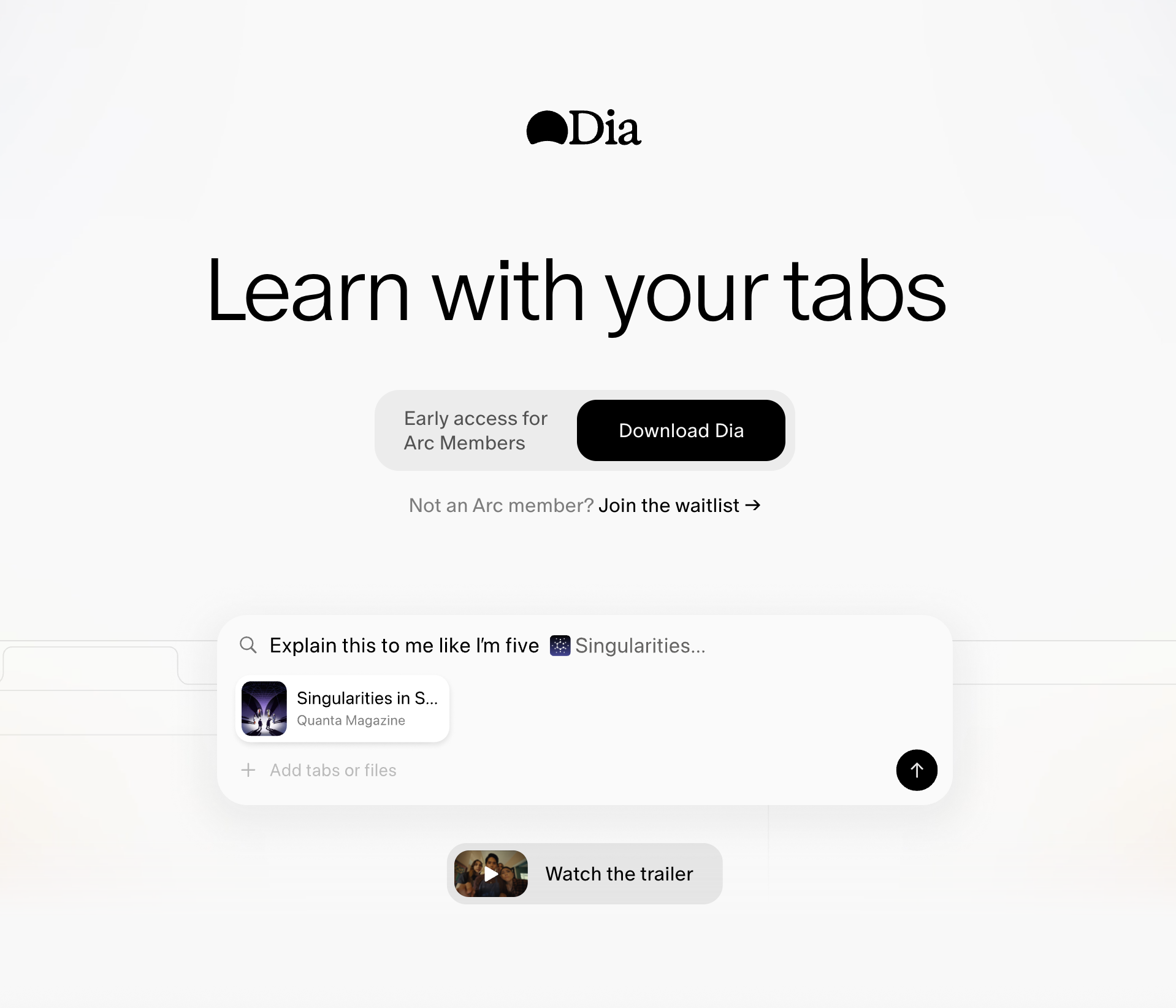
A new generation of AI-powered browsers is quietly redefining how we search, read, watch and write online. These are becoming companions, assistants and collaborators.
What is an AI Browser, exactly?
Think of it like this: instead of jumping between tabs and tools to get stuff done, the browser itself helps you. You’re watching a YouTube tutorial? It’ll summarise the key takeaways in a few seconds. Reading a breaking news story? It can suggest background reading and context on the fly. Writing an email or report? It can proofread, rephrase, or even offer suggestions.
It’s like ChatGPT… but living inside your browser, not in another window.

Why it matters
The internet is a mess of tabs, distractions and way too much content. Browsers like Dia, Comet and soon, possibly one from OpenAI, are tackling that chaos head-on.
By embedding smart chatbots directly into your browser, they:
-
Save you time
-
Help you learn faster
-
Reduce the mental load of juggling tools and tabs
You don’t need to know which AI model is better at language or code, it figures that out for you.
What about privacy?
Yes, these tools are powerful. But they’re also handling your data. So here’s the trade-off: the more personal your questions, the more careful you should be.
Using AI to summarise a product review? Go for it. Asking it to analyse a confidential business document? May not be the best move.
Trust is going to be a huge factor in how AI browsers evolve. It’s not just about features, but transparency.
Should you make the switch?
If you’ve ever screamed internally at your 47 open tabs, yeah, this is your moment.
AI browsers like Dia, Comet, and what’s coming next are built for people who want less friction and more flow. Writers. Researchers. Builders. Thinkers. You. Once you’ve had a browser that proofreads your doc, summarises your video, and finds related articles without you lifting a finger… it’s pretty hard to go back to the old way of working.
What used to be a passive tool is becoming your AI-powered browser assistant. It’s faster, smarter, more useful, and shockingly good at making you feel like you’ve got your life together.
- The question isn’t “Will this replace Google?”
- It’s “How long until this replaces half the things I open new tabs for?”
If you care about productivity, digital focus, and actually getting things done, the smart web browser might just be your next secret weapon.
What this means for developers
For developers, AI browsers are more than a user convenience: they’re a shift in how software gets discovered, evaluated, and even used.
Instead of building standalone tools or complex UI flows, devs may need to start thinking about how their apps and content are parsed, summarised and interpreted by AI, not just humans.
It also means coding with clarity, exposing APIs that AI can hook into and designing experiences that play nicely with a world where users ask the browser for answers, not just interfaces.

So what’s the takeaway? Developers can’t just build for humans anymore. They need to build for the AI that’s guiding those humans too. That means clearer logic, cleaner APIs, and documentation that doesn’t make people (or machines) cry.
Conn3cted are already helping businesses rethink how they build, integrate and scale in this AI-first world. Follow us for more.