
For nearly two decades, digital marketing has revolved around a simple assumption: People search. Brands respond.
Users type queries into search engines, marketers research keywords, and businesses create content designed to rank in search results. But the way people access information online is changing rapidly. Increasingly, users are not browsing pages of search results.
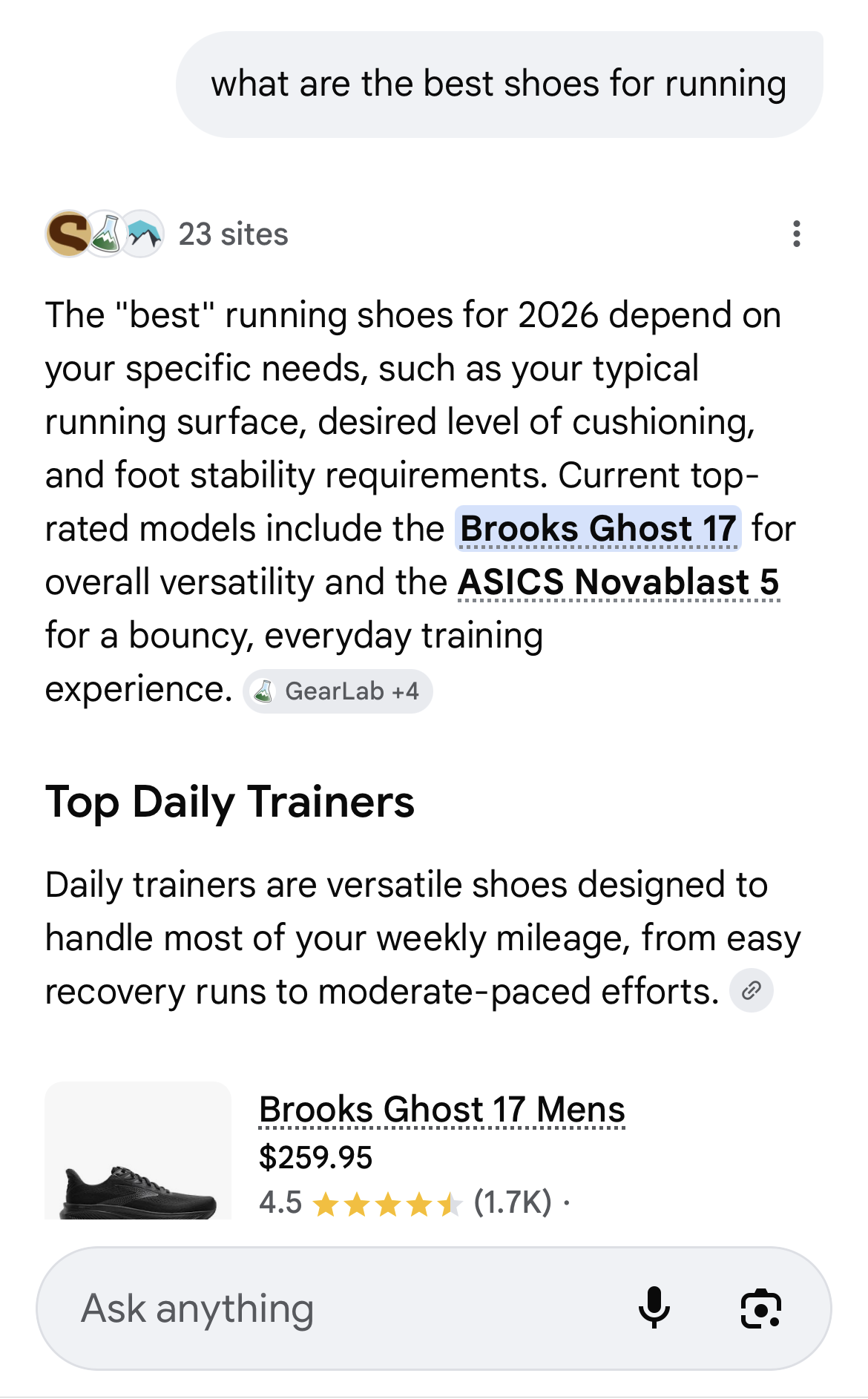
Instead, they are asking questions directly to AI systems like ChatGPT, Perplexity, and Google’s AI-powered search features.
These tools retrieve information from across the web and generate a direct answer. This shift is subtle, but the implications are significant. Your content is no longer just competing for human attention.
It is competing for AI retrieval – the step where AI finds and selects information to use in its answer.
If AI systems don’t recognise your content as a reliable source, your brand may never appear in the answer at all.
Search is AI-Mediated
Traditional search engines act as directories. They index web pages and rank them according to relevance signals such as keywords, backlinks and engagement metrics.
Generative AI works differently. Instead of presenting users with a list of links, AI systems analyse multiple sources and synthesise a response.
In practice, the search journey is becoming shorter. A user asks a question. AI retrieves and summarises the answer. The user reads the response. Often without visiting a website.
This trend is already influencing search traffic. Research from Gartner predicts that traditional search engine traffic could decline by up to 25% by 2026 as users increasingly rely on AI assistants for information retrieval.
At the same time, Google is integrating generative AI directly into search results through its Search Generative Experience (SGE), signaling that AI-driven discovery will likely become the dominant search interface.
For businesses, this means visibility is no longer determined only by rankings. It is increasingly determined by >whether AI systems select your content as a trusted source.
The question marketers MUST ASK
Marketers have been focused on one central question: What is my customer searching for?
Today there is another question that matters just as much: What is the AI searching for on behalf of my customer?
AI systems evaluate content differently than humans. They rely on patterns, context, and signals that indicate whether information is credible and useful.
Among the signals AI systems prioritise are:
- clarity of information
- logical structure
- topic authority
- credible references
- contextual relevance
Content that is vague, overly promotional, or filled with keywords but lacking meaningful insight is less likely to be used by AI systems.
This reflects a broader shift in search toward expertise and trust. Google itself emphasises these principles through its E-E-A-T framework: Experience, Expertise, Authoritativeness and Trustworthiness.
In the age of AI search, these signals matter more than ever.
Understanding search intent
At the heart of search strategy is search intent. Search intent refers to the reason behind a query — what the user actually wants to achieve.
Most searches fall into four main categories:
Informational intent
The user wants to learn or understand something.
Navigational intent
The user wants to find a specific brand or website.
Comparative intent
The user is evaluating different options.
Transactional intent
The user is ready to take action or make a purchase.
Understanding intent is critical because it determines what type of content users expect. For example, someone searching for “what is AI governance” is likely looking for an explanation or guide. If the top result is a product sales page rather than an educational resource, it fails to match the intent.
Search engines detect this mismatch through user behavior signals like bounce rates and time spent on page.
Content format must match intent
Intent does not only influence what content says. It also influences how the content is delivered. Different types of intent require different content formats. Users researching a concept typically respond well to:
- blog posts
- guides
- explainer articles
Users comparing solutions often prefer:
- comparison articles
- case studies
- expert reviews
Users ready to make a decision are more likely to engage with:
- product pages
- demonstrations
- testimonials
If the content format does not match the intent, the page struggles to perform in search results. This is one of the most common reasons why companies publish large volumes of content that generate little traffic.
The topic may be relevant, but the format is wrong.
Search intent evolves over time
Search intent is constantly evolving as user expectations and technologies change.
Queries that once returned simple blog posts may now favor deeper resources such as long-form guides, videos, or interactive tools, because users increasingly look for more detailed and authoritative information.
Search engines adjust results based on how people interact with content, rewarding pages that provide real expertise and keep users engaged. This means marketers need to continuously observe audience behaviour and adapt their content strategy accordingly.

The future of search
Search is entering a new phase. Keywords still matter, but they are no longer the center of strategy. AI systems are becoming better at understanding context, relationships between concepts, and conversational language.
The real challenge for marketers is no longer simply ranking on search engines, but also becoming a trusted source of knowledge.
Organisations that focus on answering real questions clearly, structuring content effectively, and demonstrating expertise will have a significant advantage in the evolving search landscape.
Because the future of search is about trust: from both humans and machines.

AI for business: strategy first, solutions second
Read More
The bar just got higher on LinkedIn: here’s what that means for tech brands
Read More