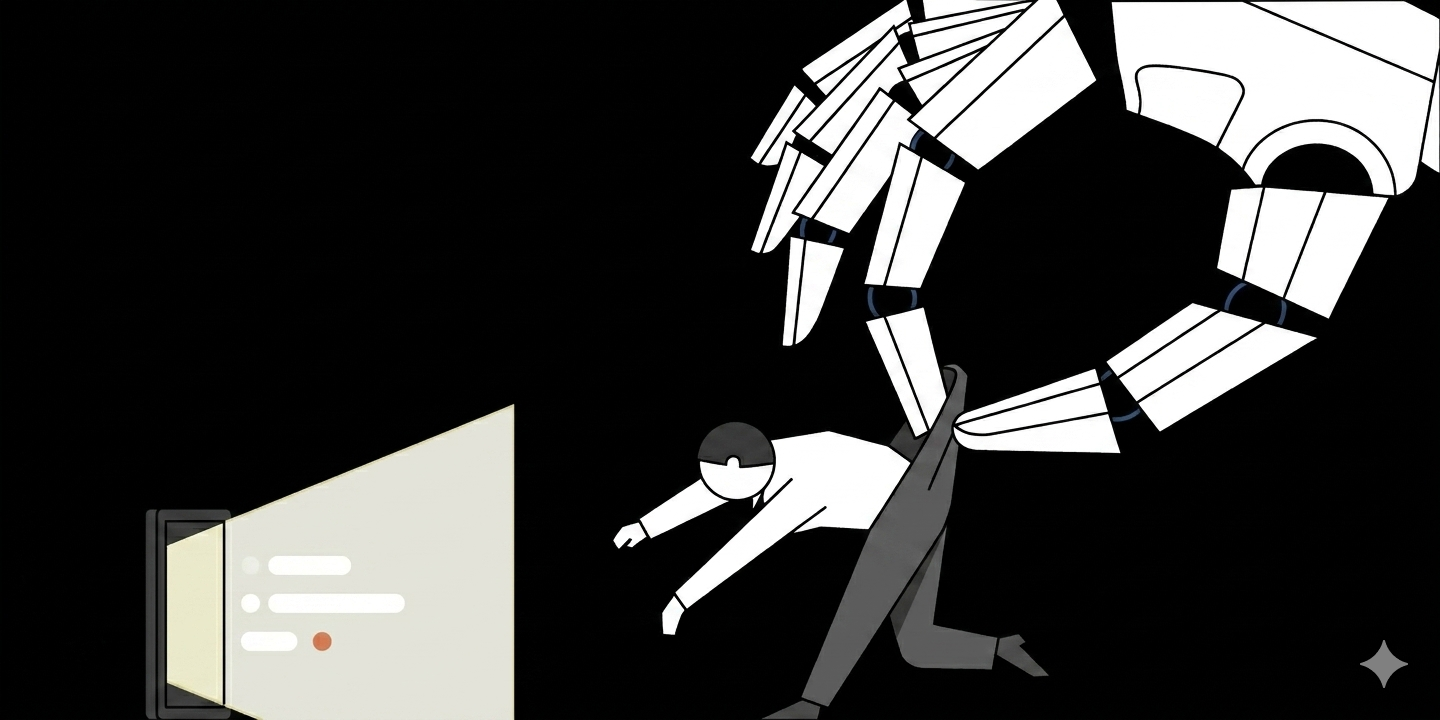
Everyone’s asking will AI replace jobs. But for business owners, there’s a more important question and the answer could define your competitive edge.
Will AI replace jobs? It’s the question dominating boardrooms, headlines and late-night Google searches. And while it’s not a bad question, it might not be the most useful one, especially if you’re running a business.
Because the more you zoom out, the more you realise the real shift isn’t about headcount. It’s about value. Specifically, which parts of your business create it and which parts are quietly becoming interchangeable with everyone else’s.
AI is changing what work looks like. The businesses that understand that early are the ones pulling ahead.

The noise around "will AI replace jobs" is drowning out a better conversation
Type “will AI replace jobs” into any search engine and you’ll find thousands of articles, each more alarming than the last. Entire industries mapped out. Roles ranked by risk. Timelines debated.
It makes for compelling reading. But it doesn’t actually help you make better decisions about your business.
Here’s a more grounded way to think about it. AI isn’t replacing work wholesale. It’s separating work into two categories: the kind that can be automated and the kind that can’t. One is becoming cheaper and faster every day. The other is becoming more valuable.
The question worth asking isn’t “will AI take my job?” It’s “which parts of what I do can be commoditised and what’s left when they are?“.
What is commoditisation?
Commoditisation happens when something that was once scarce becomes widely available. When everyone can access the same capability, at the same price, that capability stops being a differentiator.
AI is doing this to a significant portion of knowledge work. Tasks that once required skill, time and training — writing a brief, generating a report, building a basic application, producing a first draft — can now be completed in minutes with the right tools.
That’s not a threat in itself. It’s actually useful. But it does mean that if your competitive advantage is built on doing those things faster or cheaper than someone else, that advantage is eroding.
Generative AI reduces the cost of cognition and makes once-rare capabilities widely accessible. The risk isn’t that AI replaces strategy, it’s that it flattens differentiation faster than businesses can redesign how value is created.
For business owners, that’s the real issue. Not whether AI replaces you – but whether it makes you indistinguishable.
The signal vs the noise
A useful way to think about AI in your business is to divide your work into two buckets: signal and noise.
Noise is the work that needs to get done but doesn’t require your best thinking. Repetitive tasks. Standard processes. Formatting, scheduling, templating, early-stage drafting. High effort, low differentiation.
Signal is everything that actually drives your business forward. The judgement calls. The strategic decisions. The deep understanding of your customers. The experience that tells you when something isn’t right, even when you can’t immediately explain why.
AI handles noise extremely well. It can generate, automate, organise and execute at a scale no human team can match.
What it cannot do is tell you what matters. It can produce a hundred variations of something, but it cannot decide which one is actually right for your business, your customers and your goals. That call still belongs to people.
When everyone can automate the “what”, competitive advantage shifts to the “how” and the “why.” Those are human questions. And they’re becoming harder to answer well, precisely because so much of the surrounding work is being automated away.
The businesses pulling ahead are the ones automating the right things
Forget replacement. The real question is: which work in your business actually needs a human?
The companies succeeding right now know what to automate and what to protect. They understand the difference between execution and judgement, and they’re building around it.
As AI takes on more execution, the value of good thinking increases.
Taste, instinct and hard-won industry knowledge can’t be generated from a prompt. They come from experience. From making decisions with incomplete information. From recognising when something feels off before you can explain why.
Mapping out what your team actually spends time on is where this has to start.
How much of it is repeatable? How much of it genuinely needs someone who’s been around long enough to know better? The more clearly you can answer that, the better placed you are.
How we think about it at Conn3cted
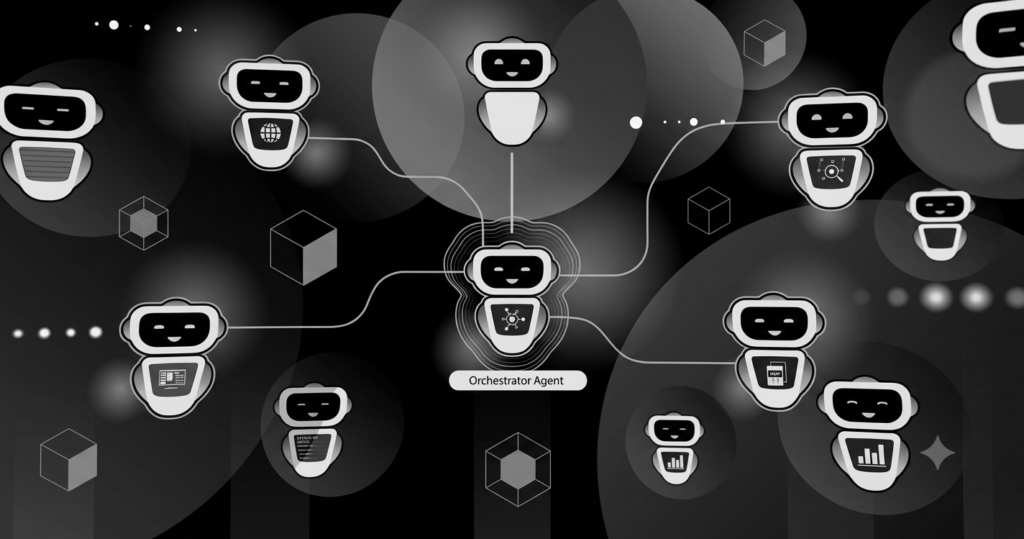
We built conn3ctedAI to automate the foundational work in enterprise software development: the architecture, data models and security frameworks that every project needs but that don’t require original thinking to produce.
That’s the noise. Automated.
What’s left is the signal: the strategy, the experience design, the decisions that make a platform work for a real business. That’s where our team focuses.
So: will AI replace jobs?
Some will change. Some tasks will disappear. That’s always been true when technology shifts.
But replacement is the wrong frame. AI raises the floor for everyone, basic execution is no longer a differentiator.
The ceiling, the thinking and judgement above the execution, is still entirely human. The businesses that understand that are the ones building something that lasts.
AI for business: strategy first, solutions second
Read More
The bar just got higher on LinkedIn: here’s what that means for tech brands
Read More