Someone in a meeting says “we should really fine-tune the LLM before we scale the agent.”
Everyone nods. You nod too. Inside, you’re doing maths, trying to figure out if any of those words mean what you think they mean.
Here’s the truth: most people are nodding. AI moved fast, and the vocabulary moved with it, and somewhere along the way it became socially unacceptable to say, “Sorry, what’s an LLM again?”
This is fine. It happens with every new technology. Nobody actually understood blockchain either. But there’s a difference between not knowing the jargon and not knowing where to start with AI in your business — and that second one is worth fixing, because it’s costing you more than a bit of meeting-room anxiety.
That’s really what an AI consulting service is for.
What an AI consulting service does (spoiler: it's not just signing you up for ChatGPT)
A lot of businesses think “doing AI” means picking a tool, giving it a login, and hoping something changes. It doesn’t really work like that. Buying access to an AI model is a bit like buying a gym membership — technically, you now have the equipment, but nothing happens until someone builds you an actual program.
An AI consulting service is that program. It starts with understanding how your business runs day to day — where the manual, repetitive, time-draining bits are, where information gets stuck between systems that don’t talk to each other, and where a well-placed bit of automation would save real hours rather than just look impressive in a slide deck.
Then it’s about matching the right AI approach to the problem and connecting it into what you already use, instead of adding one more disconnected app to the pile.
At Conn3cted, that’s the thinking behind conn3ctedAI: start with a proper conversation about what the business needs, map that into an actual plan, and only then build. Not the other way around.
None of this requires you to understand the underlying tech. That part’s our job. Yours is knowing your business — which you already do better than any AI ever will.
Before any of that though, here's your cheat sheet
Before you sit down with anyone about AI strategy, it helps to actually know what people are saying when they use these words. Not the textbook version — the version that makes sense the first time you read it.
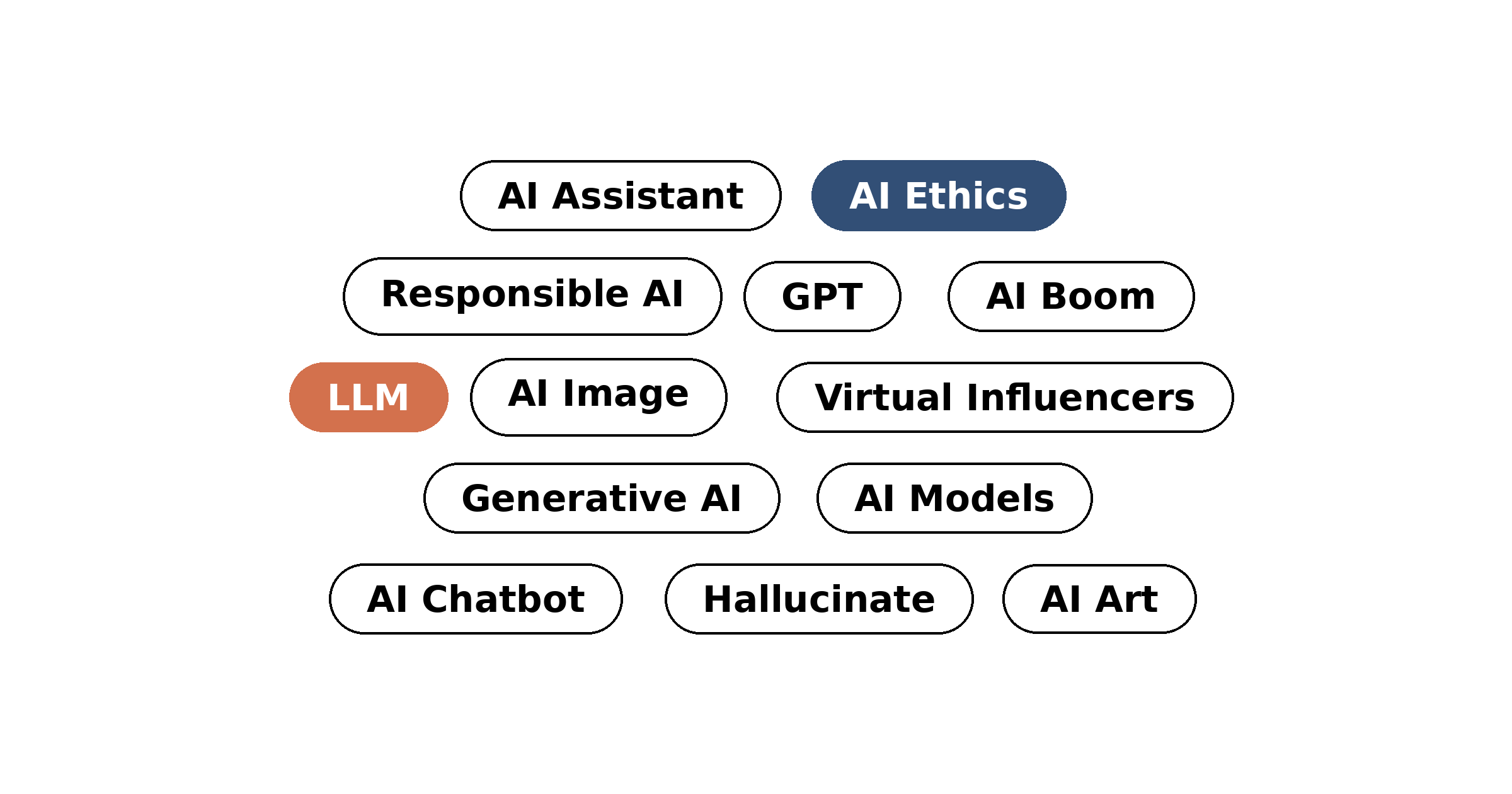
Here are five terms that come up constantly, explained without pretending you already know them.
Prompt
This is just the instruction you give an AI. The quality of what you get back depends heavily on how clear the prompt is. It’s a bit like ordering at a restaurant: ask for “food” and you’ll get something, but ask for “a medium-rare steak with chips, no salad” and you’ll actually enjoy your meal. Same idea. Vague in, vague out.
LLM (Large Language Model)
This is the technology sitting underneath tools like ChatGPT and Claude. Despite how it sounds in conversation, it isn’t thinking. It’s been trained on enormous amounts of text and has become extremely good at predicting what word comes next in a sentence. Think of it as autocomplete that went and got a degree. Impressive, occasionally overconfident, not actually conscious.
Hallucination
This is when AI states something completely wrong, but says it with total confidence. It won’t tell you “I’m not sure.” It’ll just invent an answer and present it like fact. This is exactly why AI results still need a human checking them, particularly when it comes to numbers, dates, or anything you’d actually stake your business on.
Agent
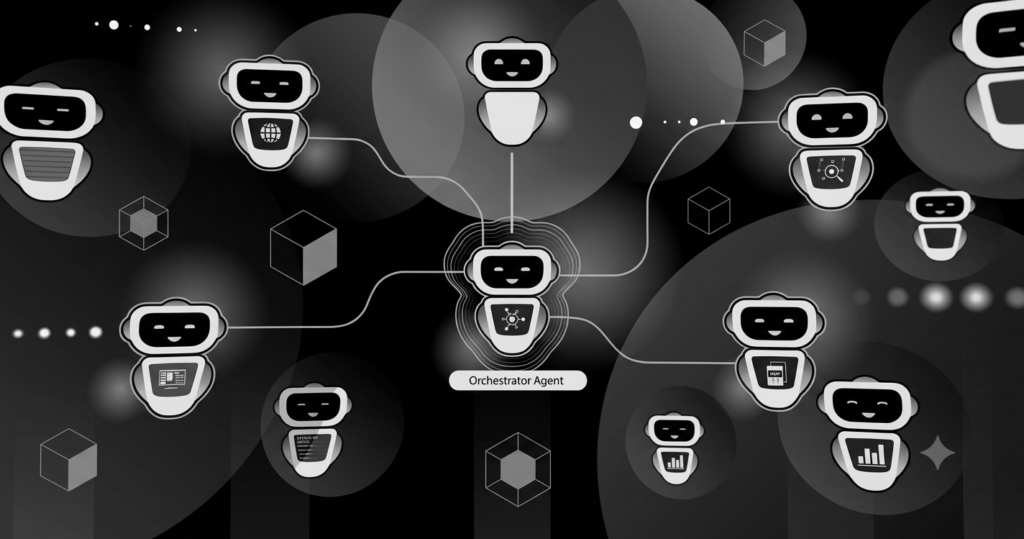
A step up from a chatbot. Instead of just answering a question, an agent can go and do something — look up information, complete a task, work through a few steps toward a goal. The difference is roughly the same as a colleague who gives you advice versus a colleague who actually goes and sorts the problem for you.
Knowledge base
This is your business’s own information — documents, processes, product details — made available to an AI so that it can give answers based on your business specifically, rather than a generic internet-average answer. This is the difference between AI that sounds smart and AI that’s actually useful to you.
Why any of this matters
Here’s the thing nobody tells you: the tools themselves are becoming less of a differentiator. New AI models get released constantly, and a lot of them can be copied or replaced fairly quickly. What can’t be copied is a business that actually understands its own operations, its own customers, and how to apply AI to real problems rather than trend-chasing.
That’s the part an AI consulting service brings — not just knowledge of the technology, but the experience to know which problems are actually worth solving with it, and which aren’t. Not everything needs automating. Some things are genuinely faster done the old way, and knowing the difference is half the job.
So, now what?
You now know five terms that used to make you nod blankly. That’s a start. But a proper AI strategy is more than vocabulary — it’s about looking at your specific business and figuring out where AI genuinely helps, and where it’s just noise.
If you’re the kind of business that’s ready to move past nodding and into an actual plan, that’s exactly where an AI consulting service earns its keep, and it’s exactly what we do at Conn3cted.
Want the fuller list of AI terms, minus the guesswork? Part two is coming. Want someone to actually sit down and figure out what AI could do for your business? That’s us.
AI for business: strategy first, solutions second
Read More
The bar just got higher on LinkedIn: here’s what that means for tech brands
Read More