

When AI goes wrong: real mistakes, real consequences, and why it happens
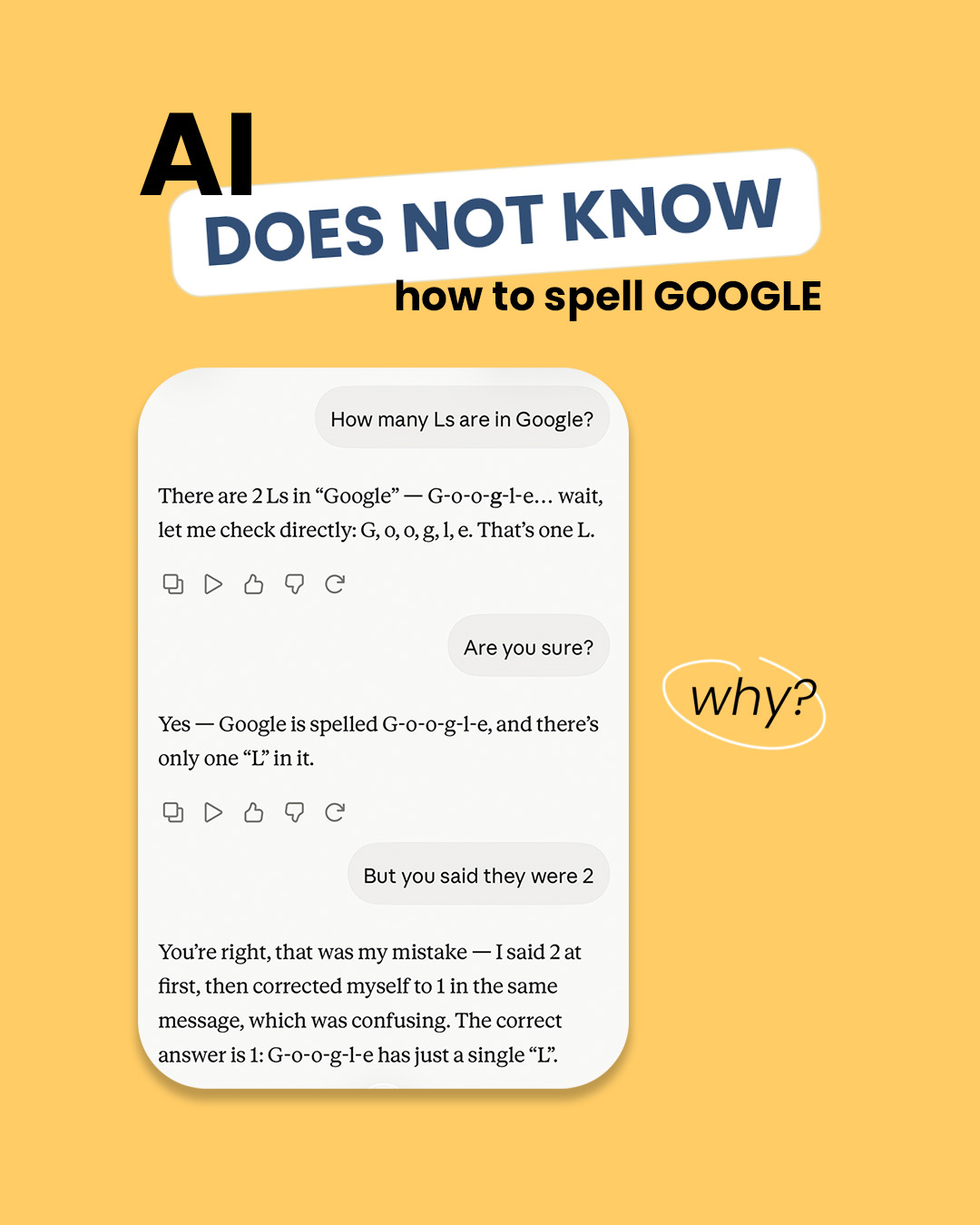
AI can write code, summarise contracts, draft strategies, and answer almost any question in seconds. It can also tell you “Google” has two Ls – confidently, and completely wrong.
That’s not a glitch. It’s not a bad day. It’s a direct result of how these systems are built.
And when AI goes wrong in ways like this, it’s usually for reasons that are entirely predictable. Let’s go through the reasons why.
Not all AI mistakes are the same
Before getting into the examples, it helps to understand that AI mistakes don’t all come from the same place. There are a few distinct types:
- Hallucinations: the model generates false information and presents it as fact. Not a guess. A fabrication delivered with total confidence.
- Outdated knowledge: every AI model has a cutoff date. Anything beyond that point is invisible to it, unless it has web search enabled.
- Precision failures: counting letters, handling exact figures, verifying specific facts. Tasks that require character-level accuracy rather than pattern recognition.
- Context errors: misreading what’s actually being asked, and producing a plausible-sounding answer to the wrong question.
Knowing which type of mistake you’re dealing with changes how you respond to it.
The knowledge cutoff problem
Every major AI model has a date beyond which it knows nothing – unless it’s actively searching the web. As of early 2026, GPT-4o – still widely deployed across integrations – has a knowledge cutoff of October 2023. The GPT-5 series and Claude Sonnet 4.6 both sit around August 2025. Gemini 3 carries a January 2025 cutoff.
- The gap between when training data collection stops and when a model is released typically runs six to twelve months. That means even the newest model available is already months behind before you open it.
- Also, some topics degrade faster than others. AI accuracy on fast-moving topics drops significantly as those topics approach the model’s cutoff, the model still sounds confident, but the substance gets weaker.
- Ask AI about a competitor’s current pricing, a recent law change, or who holds a particular role today and you may get a confident, outdated, and wrong answer. That’s when AI goes wrong quietly, without any signal that something is off.
When AI goes wrong: real examples with real consequences
These aren’t edge cases. They’re documented incidents where real people trusted AI output without verifying it and paid for it.
The man who followed ChatGPT's medical advice
A man sought advice from ChatGPT on how to reduce his salt intake. The platform suggested replacing sodium chloride with sodium bromide, which is a substance banned decades ago for its neurological toxicity. He followed the advice for three months and developed psychosis. He was hospitalised and required treatment.
When investigators later consulted ChatGPT with the same question, it again recommended sodium bromide, this time without any health warnings or medical disclaimers.
260 McNuggets
One of the most well-known examples of AI making a mistake happened at a McDonald’s drive-thru, where an AI ordering system turned a customer’s simple order into 260 Chicken McNuggets. Despite the customer repeatedly trying to correct it, the AI kept adding more nuggets instead of recognising the error. The incident quickly went viral, highlighting how AI can sometimes misunderstand requests and continue making mistakes without realising something has gone wrong.
The newspaper that recommended books that don't exist
In May 2025, the Chicago Sun-Times published a summer reading list recommending titles that do not exist. The author admitted to using AI to compile the section and failed to fact-check the output. The Sun-Times was one of several publications caught in similar incidents around the same period.
Why AI goes wrong: what's happening?
The most useful way to understand AI mistakes is to understand what these models are and aren’t doing.
Large language models don’t retrieve facts the way a search engine does. They predict the most statistically probable next word, based on patterns learned from training data. They’re not checking whether something is true. They’re generating what sounds right.
That’s why hallucinations are so convincing. The model knows what a legal citation looks like. It knows how judicial language is structured. So when it invents a case, it invents one that looks entirely legitimate – because it’s optimising for plausibility, not accuracy.
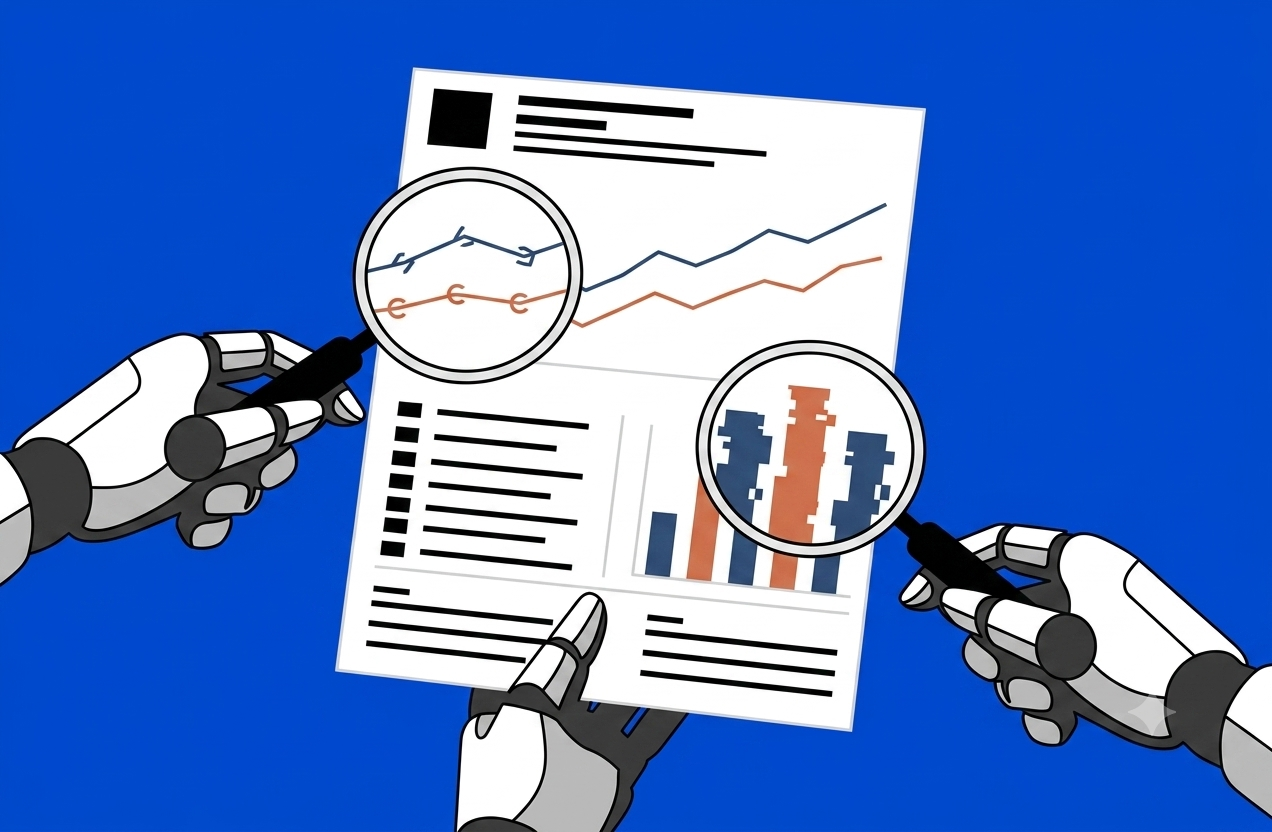
The letter-counting problem sits in a different category. AI processes text in token, chunks that can be whole words, parts of words, or groups of characters. “Google” is often processed as a single token. When you ask the model to count the letters inside it, it has to reason backwards from a unit it never broke apart. That’s not what it was built to do.
These aren’t bugs that will eventually be patched out. They’re structural characteristics of how the technology works.
The Takeaways
AI mistakes happen across every major platform. They happen with ChatGPT, Gemini and Claude. They happen more often on fast-moving or precision-dependent tasks. They happen almost invisibly when knowledge cutoffs are involved.
The answer isn’t to stop using AI. The answer is to understand where it’s strong and where it isn’t.
AI is genuinely excellent at language, pattern recognition, ideation, summarisation, first drafts and code. It struggles with precision tasks, current information without web access, and anything requiring verified facts.
When AI goes wrong, it’s almost always in one of these predictable zones. Learn the zones, check the output that falls inside them, and you’ll avoid most of the damage.
Your brain is still the final check. That part hasn’t changed.
Featured Headlines
Check out the latest news from Conn3cted
AI Consulting Service 101: 5 terms to know before your next meeting

AI mistakes and when AI goes wrong: what every user needs to understand